





Sunflower as a Symbol of Autism: How It Helped Us While Traveling
Discover how the Hidden Disabilities Sunflower supports families traveling with autistic children. Our personal airport experience, meltdowns, and what truly…
 Nina Bakalová4 March 2026 · 4 min read

What the Sunflower Symbol Means in Autism
The sunflower symbol is used to represent hidden disabilities. These are situations where a person may not appear to need support, yet certain environments or circumstances can be significantly more challenging for them. Autism is one of them.
Children on the autism spectrum often manage everyday situations well. However, environments with excessive sensory input, loud noise, crowds, or unpredictability can be overwhelming. One of the most difficult challenges is waiting. Long queues, uncertainty, and environmental pressure can lead to intense stress or sensory overload.
The sunflower does not indicate a diagnosis. It is simply a signal to others that a person or family may need more time, a calmer approach, or additional support.
How the Hidden Disabilities Sunflower System Works
The Hidden Disabilities Sunflower program originated in the United Kingdom and is now active in hundreds of airports, hospitals, shopping centers, and public transport systems worldwide. A sunflower lanyard or badge signals to staff that the wearer may have a non-visible disability. Employees are trained to respond calmly, patiently, and offer assistance. At airports, this often means faster security processing, avoiding long queues, or receiving individual support.
For families traveling with an autistic child, this can determine whether a journey unfolds calmly or under significant stress. The system continues to expand, with hundreds of organizations participating across multiple countries.
Traveling with an Autistic Child, Our Experience

Traveling with a child on the spectrum can be particularly challenging due to sensory-heavy environments. The biggest difficulty for our daughter has always been waiting, waiting without movement, without a clear end point, often in noisy and crowded spaces.
Airports are exactly that kind of environment. Large crowds, queues, security checks, changes, and constant transitions. In these situations, we have experienced meltdowns more than once. It was not defiance or misbehavior. It was sensory overload, the nervous system simply could not process any more input.
For a parent, these moments are extremely difficult. You are trying to help your child regulate while simultaneously feeling the pressure of the environment and the reactions of people who do not understand what is happening.
That is why the sunflower symbol means more to us than just logistical convenience. Less waiting means lower risk of overload and a much calmer travel experience.
We explore similar situations in our TAMITOS project. One of the characters, Hnevko, represents emotional and sensory overload. He helps explain that these reactions are not misbehavior, but a nervous system response to overwhelming stimuli.
Not Everywhere Recognizes the Sunflower
During our travels, we experienced different approaches. At some airports, almost no one recognized the sunflower symbol, and we felt no difference in support. We managed everything on our own, and the situation was just as challenging as without it.
At other locations, staff were kind but the system itself was not structured. Support depended more on individual employees than on an established process.
Awareness is growing, but consistent support is still not universal.
Dubai, The Best Airport Experience for Families with Autism
Our best experience was in Dubai. Dubai International Airport is one of the places that systematically works on accessibility for people on the spectrum.
Queues were clearly marked with the sunflower symbol, and staff were familiar with the program. In several situations, we were automatically allowed to move ahead and were offered assistance without needing to explain our situation.
The biggest difference was the attitude. Communication was calm, and it was evident that staff were prepared for these situations. For the first time, passing through an airport did not feel like a stressful battle, but a manageable experience.
It was not about special treatment. It was about small organizational adjustments and well-prepared people. That made all the difference.
How to Get a Sunflower Lanyard and Request Support
At many airports, sunflower lanyards can be obtained at information desks or assistance counters. Some airports allow you to request support online in advance.
It is important to notify the airline or airport before traveling that you are flying with a child who has special needs. Most airports offer assistance services that can help with navigation, expedited processes, or individual support.
The earlier they are informed, the better they can prepare.
Practical Travel Tips for Families with a Child on the Spectrum

Arriving at the airport with sufficient time reduces pressure related to time constraints. It also helps to walk your child through the travel process in advance and explain each step.
Familiar objects, noise-canceling headphones, or regulation tools can make a significant difference. Every small reduction in environmental stress can influence how the entire journey unfolds.
The sunflower symbol is just one tool, but often a very important one.
Why the Sunflower Matters for Families with Autism
Autism is a non-visible disability. Others may not realize that a situation that feels routine to most can be extremely demanding for someone else.
The sunflower symbol helps bridge that gap. It communicates that a person or family may need more time, less pressure, or assistance in navigating an environment.
For parents, it also reduces the stress of social judgment and creates a greater sense of safety.
About the Author

Nina Bakalová Mother of two and co-founder of the TAMITOS project. For several years, I have been supporting our daughter on the autism spectrum and sharing real-life experiences to bring greater understanding and practical guidance to parents and communities.
Mom of two and co-founder of TAMITOS. For several years I have walked alongside our daughter on the autism spectrum, sharing real experiences from everyday life to bring more understanding and practical information to parents and everyone around them.
More articles
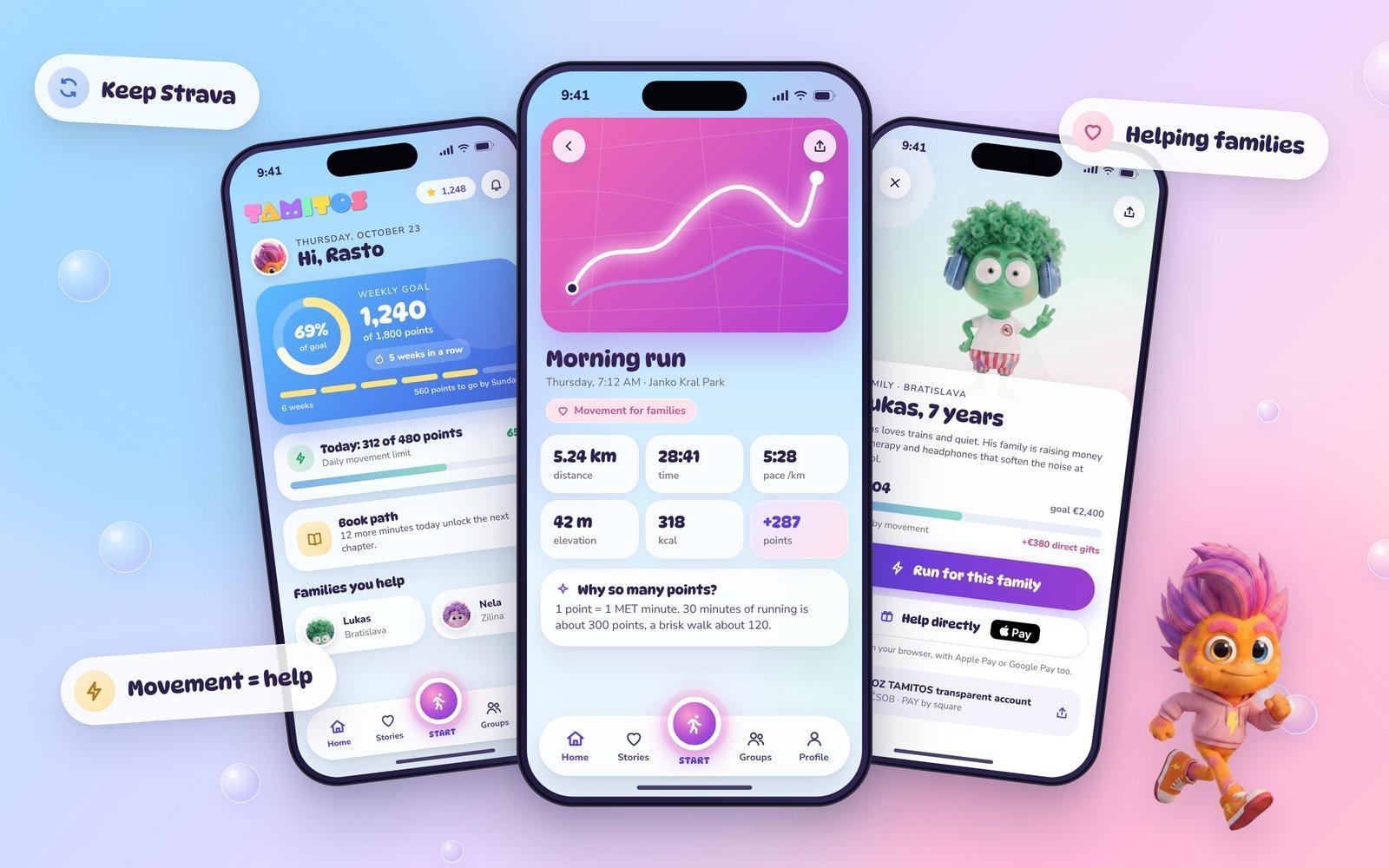
TAMITOS Move vs Strava: why run with an app that helps
TAMITOS Move is not just a charity app. It records your runs, walks and rides, gives you groups, photos, comme…
Autistic person or person with autism: why asking matters
Both “autistic person” and “person with autism” can belong in a respectful conversation. When referring to a p…

Leaving the playground: agreeing on the end of play
A final turn can mean different things to a parent and a child. Plan the end of playground time with honest ch…
 Free