





Autistic person or person with autism: why asking matters
How to discuss autism respectfully: identity-first and person-first language, everyday examples and why individual preferences come first.
 Nina Bakalová23 October 2026 · 5 min read

Both “autistic person” and “person with autism” can belong in a respectful conversation. When referring to a particular person, find out which wording they use and respect that choice. A style guide or a family's preference may not reflect their own. It also matters whether autism needs to be mentioned in that situation at all.
Imagine adults preparing a school poster. One changes “autistic children” to “children with autism.” Another changes it back. Both want to be considerate, but nobody has asked the person the text is about.
This fictional example suggests a simpler starting point: whose story are we telling, and how do they want to be described?
What do the two approaches mean?
“Autistic person” is an example of identity-first language, which names autism as part of a person's identity. “Person with autism” is person-first language, placing the person before the condition. ASHA's terminology overview describes both approaches and the importance of individual preference.
These definitions are not a grading system for other people. A single phrase cannot tell us how a parent supports their child or how an adult experiences their identity. Our introduction to neurodiversity for parents and teachers offers wider context for difference. This article focuses on the narrower question of choosing words when talking about someone.
Why might someone prefer autistic?
The Autistic Self Advocacy Network presents the view that autism is inseparable from identity and uses identity-first language. Hearing that perspective directly from self-advocates matters. We should not assume that an adjective a person chooses for themselves must automatically be insulting.
That perspective does not create a requirement to describe every individual in the same way. The National Autistic Society uses identity-first language while prioritising each individual's preference. An organisation can have a consistent editorial style and still respect different wording in someone's own account.
How can you ask without turning it into a test?
A question can be brief: “How would you like us to describe you in this article?” Or: “Do you use autistic person, person with autism, or something else?” It does not need an accompanying speech about why there should be only one acceptable answer.
The following situations are original fictional examples. They are not personal memories, interview records or accounts of our family.
A short introduction for a club website
A club organiser is preparing an introduction to a new member. Before choosing terminology, she can ask whether the member wants this information included at all. Being comfortable with a word in a private conversation is not automatically agreement to a public introduction organised around a diagnosis.
Perhaps the member mainly wants to say that they draw maps and play the drums. In that case, respect changes more than one phrase. It changes which part of the person the introduction brings into view.
The organiser can also explain where the text will appear. A short note for people in the club is a different context from a public social media post. This is an ordinary conversation about someone's story, not a reason to make them defend their identity to every new audience.
A correction during a conversation
A friend says, “I prefer person with autism.” A straightforward response might be: “Okay, I'll use that.” There is no need to defend how many articles you have read about the topic.
If you get it wrong later, a brief correction can be enough before continuing. The other person does not also have to reassure you that your intentions were good. The conversation can return to what you were discussing before the wording came up.
What if someone has not chosen a term?
Not everybody needs a prepared position on terminology. Autism Central explains that there is no universally accepted language and emphasises personal choice. Asking should not become a demand for a permanent decision.
In a fictional family conversation, a child asks what autistic means. An adult can explain the word without immediately requiring the child to select a lifelong description for themselves. Our guide to explaining autism to children explores starting such conversations in a clear, approachable way.
If someone communicates without speech, that is not a reason to automatically substitute our perspective for theirs. Our AAC introduction explains different ways people communicate. Neither article provides a method for assigning a particular person's preference without their involvement.
What should you check before publishing?
For a short personal profile, separate three questions: does the person want the information included, which words have they chosen, and is the description specific? “Needs a quieter space at the event” communicates something different from a broad judgement about someone's whole personality.
Terminology alone does not make an article considerate. A preferred phrase can still sit inside a story that reduces a person to a problem or makes them into compulsory inspiration for everyone else. Reading the whole paragraph matters more than checking off one adjective.
When translating someone's account, keep the conversation open rather than assuming that English wording settles every choice in another language. A translation should not silently turn a personal preference into an organisation's preferred label.
Common questions
Should I correct someone's description of themselves?
You do not need to replace a person's own words with your favourite term. You can ask how they want to be described in something you are writing.
Does different wording mean a different diagnosis?
A language preference does not determine a diagnosis or the support somebody needs. This is an article about respectful communication, not clinical assessment.
What might help start the conversation with children?
A shared story can create space for questions about difference. You can explore the story behind our first TAMITOS book. This is our own book recommendation. It does not replace an individual's voice or professional support, and we make no claim that reading it treats a condition.
More everyday conversations
In a group, respectful language also means sharing a story without making one child the lesson. For another everyday agreement, see planning the end of playground time.
Mom of two and co-founder of TAMITOS. For several years I have walked alongside our daughter on the autism spectrum, sharing real experiences from everyday life to bring more understanding and practical information to parents and everyone around them.
More articles
TAMITOS Move vs Strava: why run with an app that helps
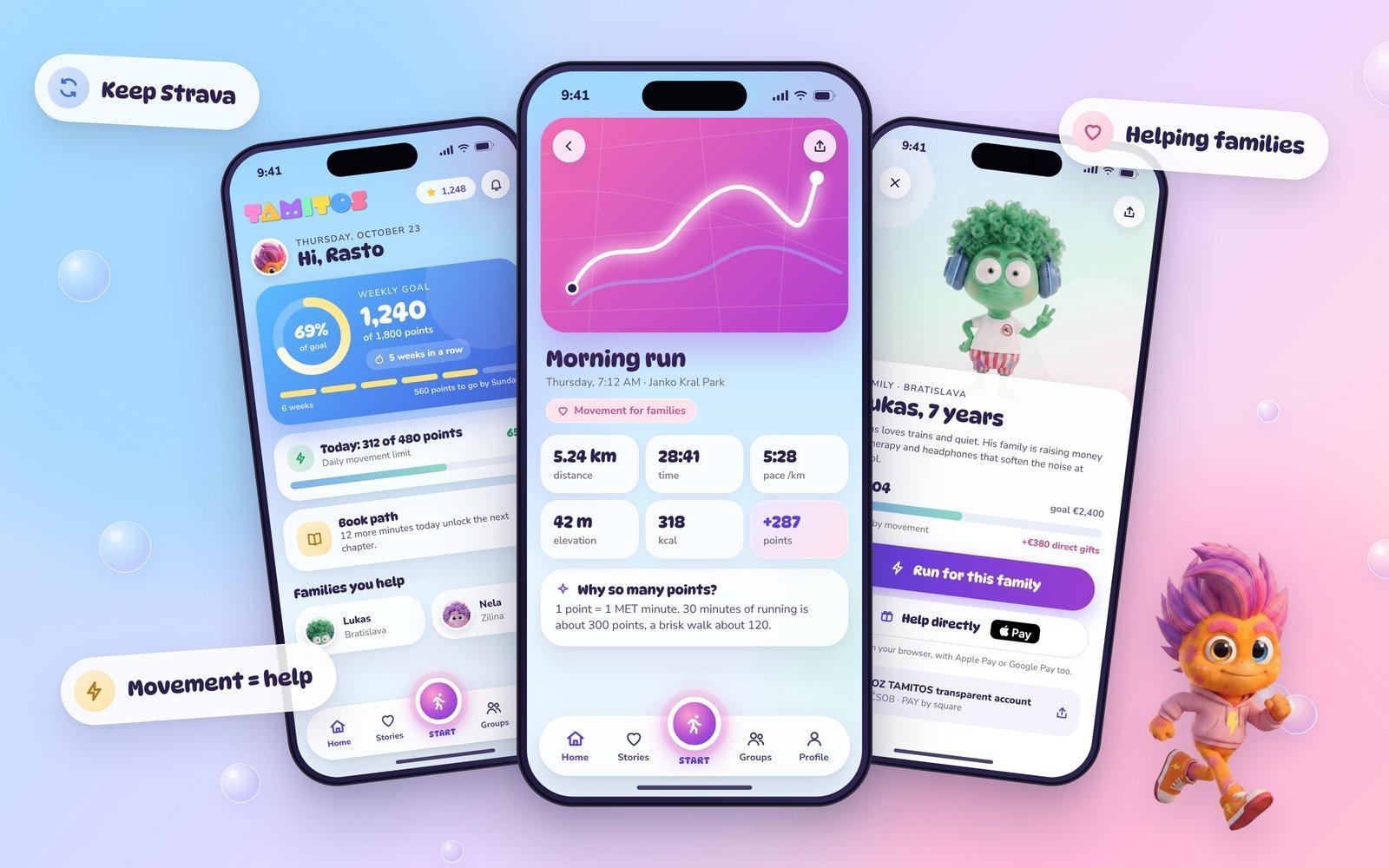
TAMITOS Move is not just a charity app. It records your runs, walks and rides, gives you groups, photos, comme…

Leaving the playground: agreeing on the end of play
A final turn can mean different things to a parent and a child. Plan the end of playground time with honest ch…

Picture-book reading in preschool: discuss difference without singling out a child
A shared story can open a conversation about difference without making one child the subject. Practical presch…
 Free