


Visiting grandparents: agree the small things first
Plan the welcome, food, breaks and leaving time before a family visit. Practical example phrases without pressure to hug or join every activity.
 Nina Bakalová15 October 2026 · 3 min read

Before visiting grandparents, agree on the timing, food, greeting and an option for a break. Choose the details that actually matter to your family. A short, specific message is often clearer than a long list of general requests. The aim is a visit you can agree on together, rather than a perfect occasion.
Start with one practical request
Instead of writing “please respect our needs”, try something concrete: “We expect to arrive around three. It would help to settle in first and offer food afterwards.” The hosts then know what you are asking them to do, without having to interpret an abstract instruction.
The examples below are editorial suggestions. They are not accounts of a real family or a therapy programme. Pick the parts that suit you. One child may want to greet everyone immediately; another may prefer time to look around.
Agree on greetings and food
A greeting need not involve a kiss or a hug. It might be a wave, a word, a gesture or a moment to get comfortable. You can agree this before arriving, rather than making the child explain a preference in front of the whole room.
For food, ask what will be served. You might say: “We will bring a familiar snack so there is an option we know. We can decide about lunch when we are there.” If an allergy is involved, agree the actual safety arrangements with the people preparing the food. This article is not a dietary or medical plan.
Include breaks and leaving in the plan
Check what quieter space is genuinely available. A separate room is useful only if it can actually be used. Avoid promising quiet to a child when a large celebration will be taking place next door.
You can also explain the departure: “We are planning about an hour this time. Leaving earlier would not be a criticism of the visit.” You do not have to extend the occasion to reproduce a previous family gathering. For a larger event, see our birthday invitation guide.
Frequently asked questions
Do I have to explain a diagnosis to relatives?
A practical agreement can begin with the particular need. Choose how much personal information to share with attention to your circumstances and the child's privacy.
What if grandparents want to help but are unsure how?
Offer one useful task, such as putting out a familiar cup or showing where coats go. A small agreement is easier to understand than an expectation to get everything right.
Does the visit need a planned activity?
Not necessarily. Being together can be enough. A book or game can be available without becoming a compulsory part of the afternoon.
Offer something people can join in with
If you would like to read together, our guide to reading without a quiz offers a different starting point. Explore the TAMITOS book page for our own story and current edition information. A book can be one option in a bag, rather than a promise that a family visit will go smoothly. The useful starting point remains the agreement between people.
A related guide: Reading with two children of different ages.
A related guide: A child's first museum visit: keep the plan small.
For a practical next step, see our related guide: A child's first cinema visit: what to check.
A short, optional baking activity can be one way to spend time together at home. For practical choices about jobs, stopping and kitchen safety, see Baking with children when noise or sticky hands get in the way.
Mom of two and co-founder of TAMITOS. For several years I have walked alongside our daughter on the autism spectrum, sharing real experiences from everyday life to bring more understanding and practical information to parents and everyone around them.
More articles
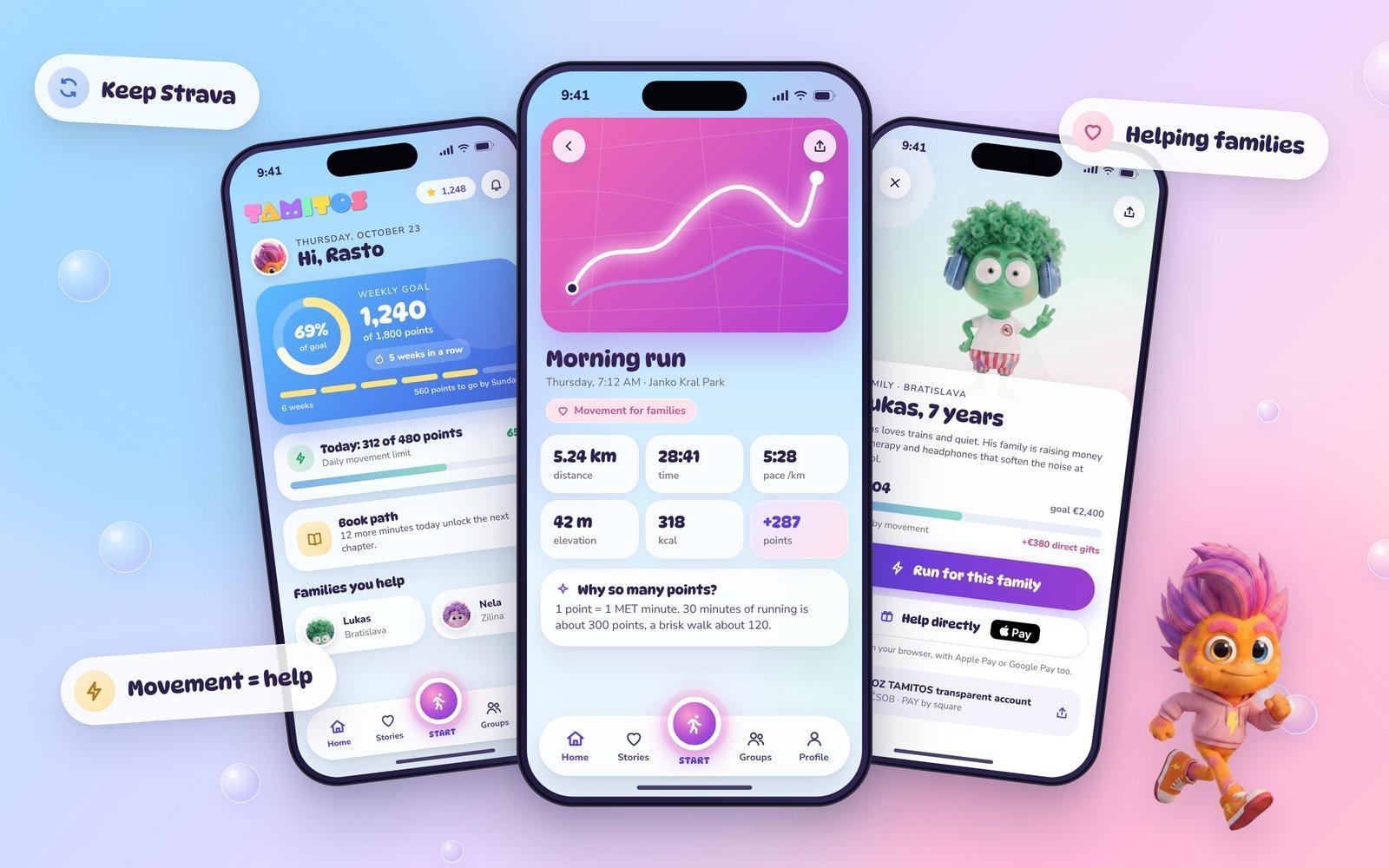
TAMITOS Move vs Strava: why run with an app that helps
TAMITOS Move is not just a charity app. It records your runs, walks and rides, gives you groups, photos, comme…
Autistic person or person with autism: why asking matters
Both “autistic person” and “person with autism” can belong in a respectful conversation. When referring to a p…
Leaving the playground: agreeing on the end of play
A final turn can mean different things to a parent and a child. Plan the end of playground time with honest ch…
 Free