





Autism at school: support measures, teaching assistants and working with the school
What support an autistic child can get at school, how to get a teaching assistant, steps with the counselling service and what to tell the teacher.
 Nina Bakalová8 October 2026 · 7 min read

Short answer: An autistic child is entitled to support at nursery and school, for example changes to the environment, an individual education plan or a teaching assistant. The usual path is: a professional assessment, a report from the school counselling service, an agreement with the school and regular reviews. What helps most is when parents, the school and the counselling service pull in the same direction. This guide describes the system in Slovakia; other countries use similar steps under different names.
What support can a child get at school?
From 1 September 2026 the Slovak Education Act (§ 145a and § 145b) defines 14 support measures: one general, seven targeted and six specific. They are described in the ministry's Catalogue of support measures. For autistic children the most common are:
- changes to the environment: a calm spot, less noise, a seat without distractions, the option of a break,
- changes to teaching and assessment: more time, shorter tasks, written instead of oral work or the other way round,
- an individual education plan: a plan built around the needs of this particular child,
- a teaching assistant: helps the child with lessons, transitions and social situations,
- specialist staff: a school special educator, psychologist, speech therapist.
Which measures your child gets depends on their needs and on the counselling service's report.
What are the steps?
- Diagnosis or professional assessment. Start with your paediatrician, who refers you to a clinical psychologist or child psychiatrist.
- Counselling service. In Slovakia a counselling and prevention centre (CPP) or a special education counselling centre (CŠPP) assesses what support the child needs at school.
- Meeting with the school. Bring the reports and agree with the class teacher, the head and the school special educator what will be put in place and from when.
- Written agreement. The measures, the individual plan and the assistant's role should be written down so everyone knows them.
- Regular review. Every six months, sit down and look at what works and what needs to change.
What should a teacher know about an autistic child?
Prepare a one-page note for the teacher:
- what the child enjoys and is good at,
- what overloads them (noise, change, touch, long waits),
- what it looks like when a meltdown or shutdown is coming, and what helps,
- how to communicate best (short instructions, pictures, more time to answer),
- a parent's contact.
A teacher who understands why a child reacts differently responds with adjustments, not punishment.
How can classmates understand autism?
When classmates understand, teasing and conflicts go down. A short class talk, a story or a book that explains autism through characters helps. The TAMITOS book is for children aged 4 to 11, families and teachers use it, and the project's expert guarantor is NIVAM, the Slovak National Institute for Education and Youth. More in How to explain autism to a child.
15 minutes in class: more ways to take part
This short activity is designed for children roughly aged 6 to 10. The aim is to find one practical change to a shared activity, not to guess anyone's diagnosis. You do not need a book or pupils' personal stories. Bring paper, pencils and three fictional situations. The timings are a proposed lesson plan, not a tested classroom result.
Before you begin
Explain what will happen and when it will finish. Children may speak, write, draw, point to a choice or simply listen. Do not ask anyone to disclose a diagnosis or explain a classmate's behaviour. If a discussion concerns support for a particular child, agree what may be shared with them and their family beforehand. This general activity can take place without personal information.
Minutes 0 to 2: a shared question
Write: “What helps us take part?” Explain: “Written rules help some people. A place where they can hear clearly helps others. Today we'll think of more ways to join in.” Do not require everyone to speak in turn. Record voluntary examples without names.
Minutes 2 to 5: read three fictional situations
- Adam wants to play a new board game, but does not know when it is his turn.
- Sara wants to draw with the group, but music playing beside the table bothers her.
- Alex has an idea for the class poster, but finds speaking in front of the group difficult.
No diagnosis has been assigned to these characters. Do not guess who is autistic. The task is to suggest something to offer, then ask rather than assume we already know the answer.
Minutes 5 to 10: offer a choice
Working alone or in pairs, children choose one situation. They complete three sentences: “We could offer…”, “We could ask…” and “If they don't want to, we could…” For example: “We could show whose turn it is on a card. We could ask whether that helps. If he doesn't want to play, he could watch.” Do not grade drawing or speaking ability.
Minutes 10 to 13: choose one small change
Invite volunteers to share suggestions. The class might try a written turn order, a way to submit ideas on paper or an agreement to turn music off while instructions are given. Choose something the teacher can actually provide. A quiet space must not become a punishment or exclusion presented as a reward. Nobody is obliged to accept every offer.
Minutes 13 to 15: quiet feedback
Each child may hand in a note beginning “It would help me if…” or “I'd rather not answer.” Do not read personal notes aloud without permission. At the next lesson, ask whether the agreed change was useful. Counting answers does not measure empathy or establish that the activity reduced bullying.
Avoid: recreating overload with loud noises, demanding eye contact, unwanted touch, pretending to have a diagnosis or comparing whose experience is hardest. If children mock someone, stop and address the behaviour through the school's procedures. Do not make the affected child teach everyone else.
Continue with five model conversations about autism. If a story would help, explore our own TAMITOS book and edition information. Buying a book is not required for this activity. More topics are available in TAMITOS family articles.
Original educational proposal by TAMITOS, Nina Bakalová, 21 October 2026. This activity has not been presented as clinically validated or classroom tested. General context: National Autistic Society: individual sensory experiences. Inspiration for a standalone family-resource format: Sesame Workshop: Family Connections. Neither organisation is a partner or reviewer of this proposal.
Frequently asked questions
Is an autistic child automatically entitled to a teaching assistant? Not automatically. The school decides on support measures based on the counselling service's report and the child's needs.
Can an autistic child attend a mainstream school? Yes, many autistic children attend mainstream schools with support. Some do better in a special class or school. It depends on the child.
What if the school refuses support? Ask for a written statement, contact the counselling service and, if that does not help, the school's founder or the State School Inspectorate.
When should we start planning for school? Ideally a year before the first grade. When changing schools, at least a few months ahead.
Sources
- Slovak Ministry of Education: Support measures system and Catalogue of support measures
- Act No. 245/2008 Coll. (Education Act), § 145a and § 145b
This article is general information for parents and is not professional or legal advice. Rules change, so check the current situation with your counselling service or school.
Mom of two and co-founder of TAMITOS. For several years I have walked alongside our daughter on the autism spectrum, sharing real experiences from everyday life to bring more understanding and practical information to parents and everyone around them.
More articles
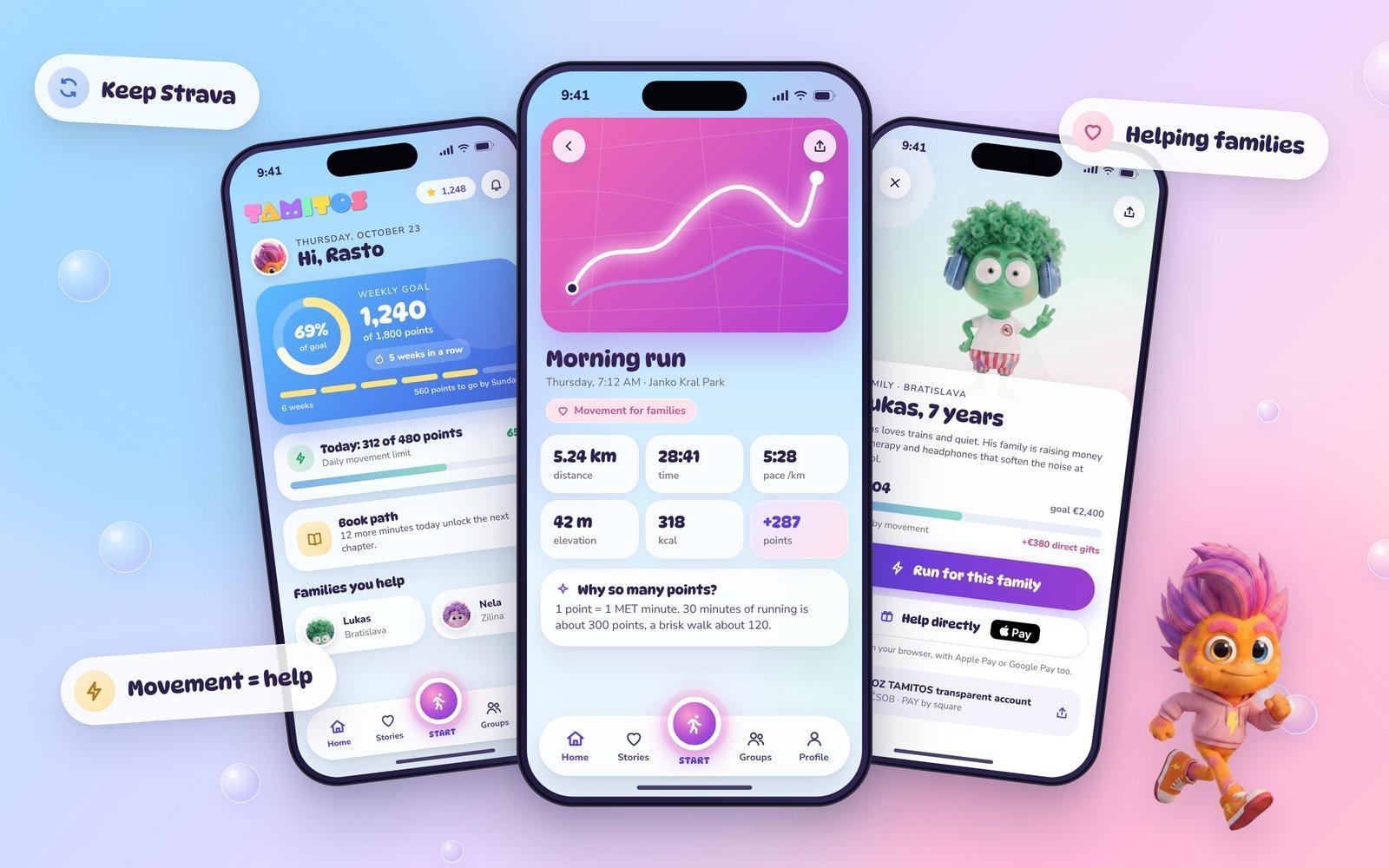
TAMITOS Move vs Strava: why run with an app that helps
TAMITOS Move is not just a charity app. It records your runs, walks and rides, gives you groups, photos, comme…
Autistic person or person with autism: why asking matters
Both “autistic person” and “person with autism” can belong in a respectful conversation. When referring to a p…
Leaving the playground: agreeing on the end of play
A final turn can mean different things to a parent and a child. Plan the end of playground time with honest ch…
 Free