


Signs of Autism in Children: Early Symptoms by Age and When to See a Professional
Early signs of autism in children by area and by age, speech, social communication, repetitive behaviour, sensory processing.
 Nina Bakalová18 August 2026 · 7 min read

Short answer: The most common early signs of autism in children are a weak response to their name, less eye contact, not pointing, delayed speech or loss of words, repetitive movements, a strong need for routine and sensitivity to sound or touch. The first signs often appear between 12 and 24 months. One sign means nothing on its own, it is the overall picture that counts. If you feel something is off, talk to your paediatrician.
Your child does not respond to their name as reliably as other children? Lines up toy cars rather than playing with them? If you notice something unusual, you are not over-anxious, you are an observant parent. This guide explains what to watch for by age, when to seek advice and what the path to a diagnosis looks like.
What is autism?
Autism (autism spectrum disorder, ASD) is a lifelong neurodevelopmental difference. It mainly affects social communication and the processing of sensory input. It is not caused by parenting or by vaccines. Every child shows it differently, from subtle to pronounced, which is why we speak of a spectrum. The World Health Organization estimates that about 1 in 127 people worldwide were autistic in 2021.
What are the early signs of autism?
Professionals look at two main areas, plus sensory processing:
1. Social communication
- reduced or inconsistent eye contact,
- does not respond reliably to their name, although hearing is fine,
- does not point to show you things, does not bring toys to share,
- less social smiling and less looking back and forth between you and a toy,
- plays alone or next to other children rather than with them.
2. Repetitive behaviour and interests
- repetitive movements: hand flapping, jumping, spinning,
- lining objects up, spinning wheels instead of playing,
- a strong need for routine and big distress at change,
- very intense interest in one topic.
3. Senses
- over-sensitivity to sound, light, clothing labels,
- or under-sensitivity, for example to pain or cold,
- picky eating based on texture.

Signs of autism by age
| Age | What to look for |
|---|---|
| up to 12 months | little eye contact, no social smile, no response to name, little babbling, no imitation of faces |
| 12 to 18 months | no pointing, no waving bye-bye, no games like peekaboo, few gestures, no words |
| 18 to 24 months | no two-word phrases, loses words or skills, mostly plays alone, repeats actions over and over |
| 2 to 3 years | little pretend play, finds contact with other children hard, strong need for routine, strong reactions to change and noise |
| 3 to 5 years | echolalia (repeating phrases), difficulty playing in a group, literal understanding, very narrow interests |
| school age | trouble with friendships and group rules, exhaustion after school, outbursts or withdrawal at home, perfectionism |
A warning sign at any age: if your child loses speech or skills they already had, seek advice straight away.
Why is autism often missed in girls?
Girls more often mask: they copy the behaviour of others, their interests look "typical" (animals, characters, books) and they keep difficulties inside. Diagnosis therefore comes later, often together with anxiety or exhaustion. If you feel your daughter is pushing through the world by sheer effort, it is just as right to seek advice as with a boy.
When and where should you seek help?
A simple rule: if you keep feeling that something is off, seek advice. You lose nothing and gain certainty. The usual path:
- Paediatrician. Describe what you see, ideally with concrete examples or a video.
- Screening. For toddlers aged 16 to 30 months there is a short questionnaire, the M-CHAT-R/F. It is not a diagnosis, but it helps decide whether further assessment is needed.
- Professional assessment. A clinical psychologist and a child psychiatrist. Standardised methods are used, for example the ADOS-2 observation and a detailed parent interview.
- School counselling service. Helps with support at nursery and school.
Waiting lists are often long, so book as soon as you have concerns.
What is not a sign of autism?
- Delayed speech on its own. It has many possible causes, such as hearing or a language disorder. More in Autism or delayed development and DLD or autism.
- One quirk. Many children have a favourite ritual or dislike noise.
- Restlessness and poor focus. These can also point to ADHD, which is often confused with autism.
Myths about autism
Autism is not caused by parenting or "too little love". It is not caused by vaccines, a claim that has been disproved many times. A child does not grow out of autism, but with support they learn and progress. And autism is neither a tragedy nor a superpower. It is a different way of experiencing the world that deserves respect and an adapted environment.
How can you help your child right now?
You can start even without a diagnosis: a predictable daily routine, warnings before changes, less sensory overload (a quiet spot, headphones, breaks) and naming emotions. When a child can say "this is too much", they can handle a hard moment before it overwhelms them. That is what the TAMITOS world is about: a book in which every big feeling has its own character. More in How to explain autism to a child.
Frequently asked questions
What are the first signs of autism in children? Most often a weak response to their name, less eye contact, no pointing, delayed speech or loss of words, repetitive movements and a strong need for routine. The overall picture matters, not one sign.
At what age does autism show? The first signs are often visible between 12 and 24 months; in some children, especially girls, much later. A professional makes a reliable diagnosis.
What is the M-CHAT? A short screening questionnaire for parents of toddlers aged 16 to 30 months. It does not diagnose, but helps decide whether further assessment is needed.
Does delayed speech mean autism? No. Delayed speech has many causes. In autism it usually comes with differences in non-verbal communication too, such as fewer gestures and less pointing.
Can older children be diagnosed with autism? Yes. Many children, especially girls, are diagnosed at school age or later. It is never too late to seek advice.
Can autism be cured? Autism is not an illness, so it is not cured. A child can be helped a great deal with understanding, support and an adapted environment.
Sources
- World Health Organization (WHO): Autism, fact sheet, 2025
- Robins D., Fein D., Barton M.: M-CHAT-R/F, mchatscreen.com
- American Psychiatric Association: DSM-5, 2013
This article is general information for parents and does not replace a professional assessment.
About the author

Nina Bakalova is a mother of an autistic daughter, co-founder of TAMITOS and author of the book Tamitos: A Story of Understanding.
Mom of two and co-founder of TAMITOS. For several years I have walked alongside our daughter on the autism spectrum, sharing real experiences from everyday life to bring more understanding and practical information to parents and everyone around them.
More articles
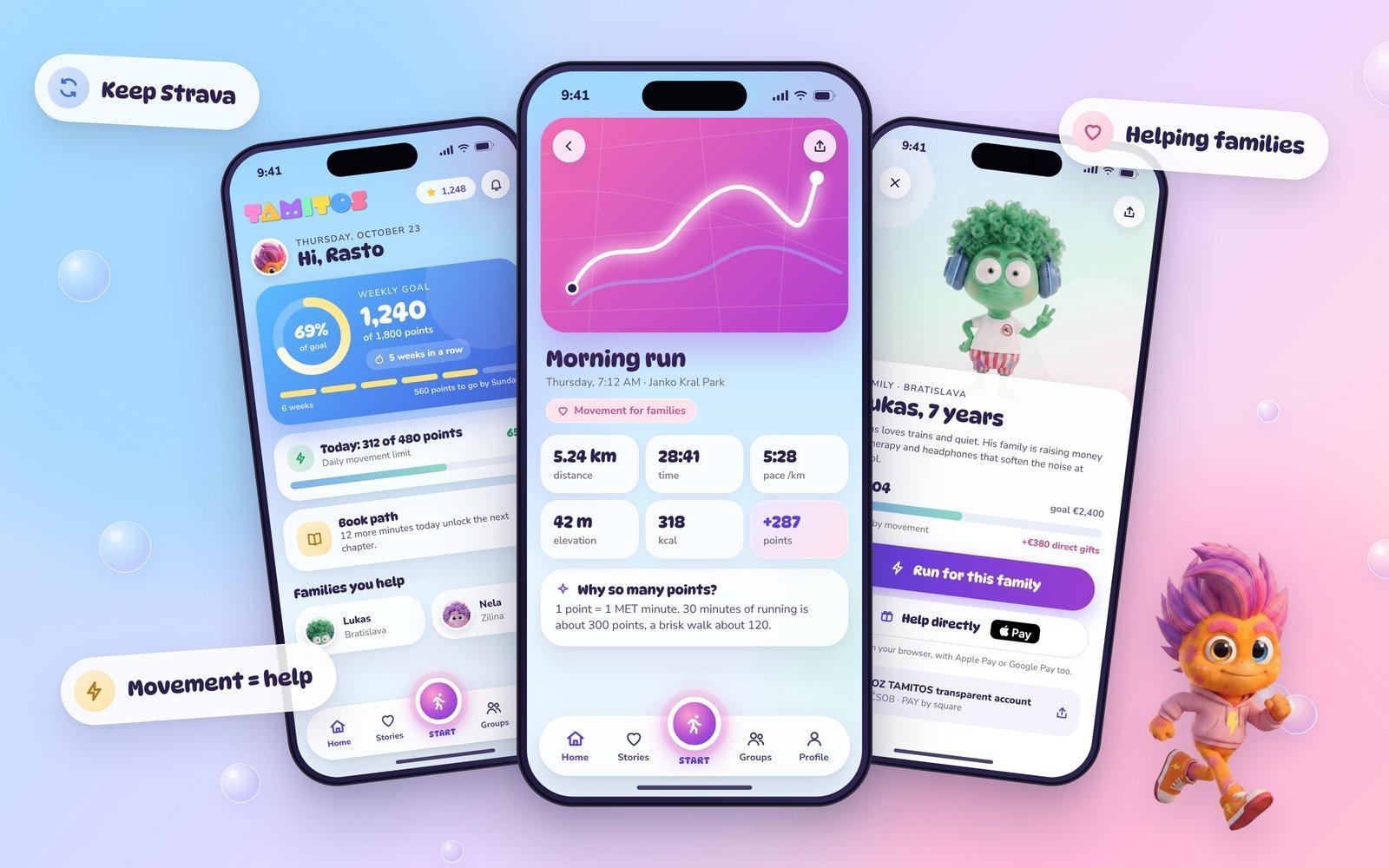
TAMITOS Move vs Strava: why run with an app that helps
TAMITOS Move is not just a charity app. It records your runs, walks and rides, gives you groups, photos, comme…
Autistic person or person with autism: why asking matters
Both “autistic person” and “person with autism” can belong in a respectful conversation. When referring to a p…
Leaving the playground: agreeing on the end of play
A final turn can mean different things to a parent and a child. Plan the end of playground time with honest ch…
 Free